How To Build A Complete Retirement Portfolio For Expats In Singapore
Post date:


Key Takeaways
- Unlike locals, expats in Singapore don’t receive CPF benefits by default. To build a secure future, expats must design a personalised retirement portfolio for expats, balancing investments, insurance, emergency funds, and portable strategies that account for Singapore’s high cost of living and potential global mobility.
- A smart expat retirement strategy involves diversifying across currencies, asset classes, and geographies while leveraging Singapore’s tax-efficient tools like the Supplementary Retirement Scheme (SRS). Spreading SRS withdrawals and coordinating income streams can significantly reduce retirement tax liability.
- For those wondering how to retire in Singapore as a foreigner, steadily growing wealth isn’t optional. Accumulated assets protect against emergencies, support global life goals, and allow for lifestyle upgrades that keep pace with Singapore’s inflation and healthcare costs.
- A strong portfolio must evolve with life changes. Annual reviews of asset allocation, CPF LIFE plans, and insurance needs ensure your retirement portfolio for expats stays aligned with your goals.
Why Investing Is Important for Expats in Singapore
Building a strong retirement portfolio for expats is essential because expats in Singapore face unique financial gaps that citizens don’t.
Anyone planning how to retire in Singapore as a foreigner needs a long-term expat retirement strategy that protects wealth, grows capital, and offsets the high cost of living. Below are the specific reasons investing is critical.
- No CPF Contributions Means a Large Future Funding Gap
Expats do not receive monthly CPF contributions (up to 37% for Singapore citizens/PRs). This means you miss out on decades of forced savings and compounding returns.
Investing is the only way to replace that shortfall and build an equivalent retirement nest egg on your own terms.
- Inflation in Singapore Erodes Cash Quickly
Singapore’s inflation has been consistently high in categories like food, healthcare, and utilities. Keeping money in a bank account (often earning <1% interest) means your purchasing power shrinks every year.
Investing positions your wealth in assets that have historically grown faster than inflation, thereby preserving your real spending power.
- Singapore’s Tax System Lets You Grow Wealth More Efficiently
With no capital gains tax, no dividend tax on many foreign assets, and no inheritance or wealth taxes, expats keep a larger share of their investment returns.
For long-term retirement planning, this significantly boosts compounding, especially for high-income earners who would otherwise face higher taxes in their home country.
- Access to World-Class Global Markets and Products
Singapore gives expats access to multi-currency accounts, international brokerage platforms, offshore pension structures, and global investment products not available in many home countries.
This helps you diversify across sectors, regions, and risk levels, reducing dependence on a single economy and strengthening portfolio stability.
- Portfolio Portability for International Careers
Expats may relocate to different regions or eventually return home. Structuring your investments internationally ensures that your portfolio remains accessible, transferable, and tax-efficient, regardless of where you move.
This flexibility is crucial for a retirement plan that must withstand multiple country transitions.
- Supports Singapore’s Higher Living Costs and Long-Term Lifestyle Needs
Housing rentals, medical insurance, and international school fees place significant pressure on expat finances.
Investing builds additional income streams (capital gains or distributions) that help fund these expenses now and cushion long-term retirement costs, especially if you plan to retire in Singapore, which is one of the most expensive cities in Asia.
- Singapore’s Regulatory Stability Encourages Long-Term Planning
With MAS overseeing a transparent, well-regulated financial environment, expats benefit from stronger investor protections, lower systemic risk, and predictable rules.
This stability makes Singapore one of the safest places globally to grow long-term retirement assets without worrying about political or regulatory shocks.
Most Popular Expat Investment Options in Singapore
When building a retirement portfolio for expats, Singapore offers a wide range of investment instruments that cater to different risk levels, income needs, and long-term financial goals.
Understanding these options is essential for anyone planning how to retire in Singapore as a foreigner, as each plays a unique role in creating a balanced and sustainable expat retirement strategy.
Below is a breakdown of the most common investment choices expats use to grow and protect their wealth.
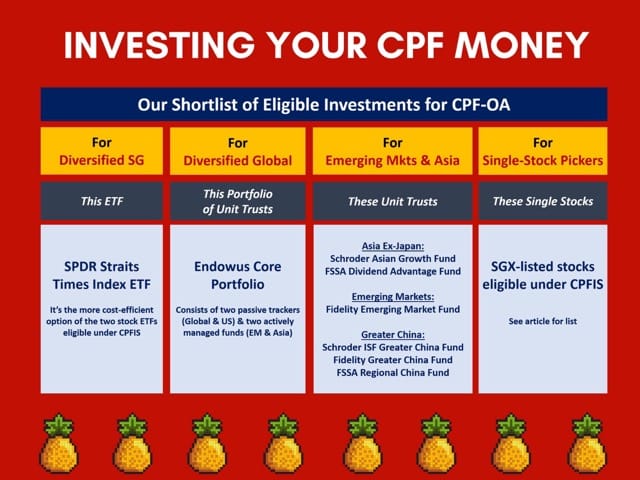
CPF Investment Scheme (CPFIS)
Although CPF isn’t available to most expats, foreigners who later become Singapore Permanent Residents may consider CPFIS as part of their long-term plan.
This scheme allows members to invest CPF savings above a minimum balance to generate higher returns than CPF’s base interest, potentially.
Key components include:
- CPFIS-OA: Invest OA savings (after the first S$20,000) into unit trusts, ETFs, bonds, and selected shares.
- CPFIS-SA: Invest SA savings (after the first S$40,000) into lower-risk options like Singapore Government Bonds and approved unit trusts.
Supplementary Retirement Scheme (SRS)
SRS is one of the most effective tools for expats looking to combine tax efficiency with long-term wealth building. Foreigners benefit from a higher annual contribution cap, making SRS especially relevant for high-income professionals building their retirement base.
Notable advantages include:
- Tax-deductible contributions up to S$35,700 per year for foreigners.
- Wide investment choices (stocks, REITs, bonds, ETFs, SGS, SSBs, insurance products).
- Only 50% of withdrawals are taxable after the statutory retirement age, spread over 10 years to minimise tax impact.
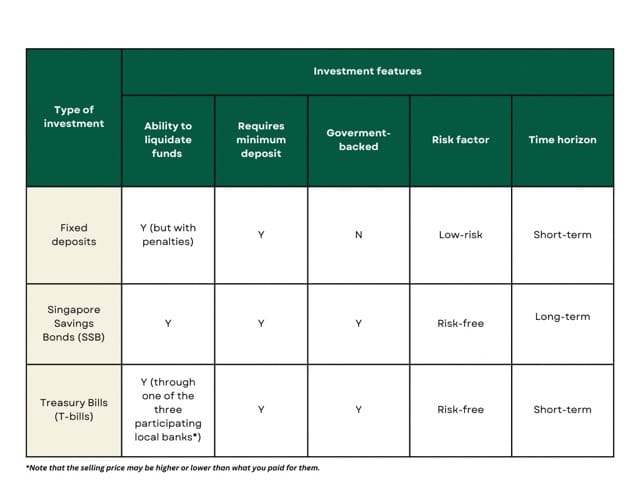
Singapore Savings Bonds (SSBs) & Treasury Bills (T-Bills)
Government-backed instruments, such as SSBs and T-bills, play a stabilizing role in a retirement portfolio for expats by offering low-risk, flexible capital protection.
Popular among conservative expats wanting low-risk building blocks within their expat retirement strategy.
Singapore Savings Bonds (SSBs)
- Backed by the Singapore Government; extremely low risk.
- Flexible 10-year holding period with no penalties for early redemption.
- Accessible with a minimum S$500 investment.
- Recent 10-year average returns typically range from 2.29%–3.47%.
Treasury Bills (T-Bills)
- Short-term (6–12 months) government securities purchased at a discount.
- Recent yields: 1.41% for 6-month, 1.35% for 1-year (2025).
- Minimum investment: S$1,000.
- Useful for short-term parking of cash at competitive yields.
Wealth Management Platforms
Digital wealth platforms are gaining popularity among expatriates who prefer automated, globally diversified portfolios that require minimal active management. These tools analyse your goals and risk profile, then manage and rebalance your portfolio automatically.
Common features include:
- Algorithm-driven portfolio construction and rebalancing.
- Lower fees compared to traditional fund managers.
- Options like general investing, BlackRock-powered global portfolios, and ESG strategies.
Cash Management Accounts
Cash management products offer higher interest returns on idle cash compared with bank savings accounts, making them useful for liquidity planning within an expat retirement strategy.
They typically provide:
- Access to short-term money market funds and low-risk instruments.
- High liquidity with no lock-up requirements.
- Multiple tiers of returns, such as StashAway Simple™, Simple Plus, and Simple Guaranteed.
Real Estate Investment Trusts (REITs)
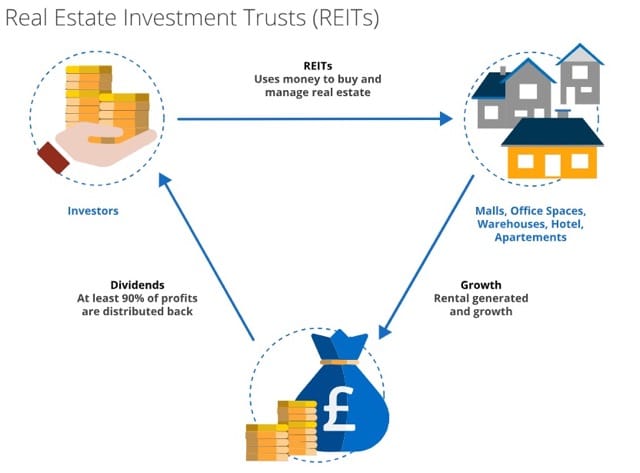
Singapore REITs are widely used by expats seeking stable dividend income without owning physical property. These trusts hold income-generating real estate across sectors and distribute most of their taxable income to investors.
Key characteristics include:
- Dividend yields typically range between 4%–8%.
- Exposure to commercial, retail, industrial, and logistics sectors.
- Tax-free distributions for individual investors.
- Liquidity through SGX trading makes them easier to buy and sell than property.
Exchange-Traded Funds (ETFs)
ETFs enable expats to diversify across global markets, sectors, and asset classes at a low cost, a crucial component for long-term retirement planning.
Core benefits include:
- Broad diversification across indices or specific themes.
- Lower fees than actively managed unit trusts.
- Easy access through SGX or global exchanges.
- Popular choices include STI ETF, S-REIT ETF, bond ETFs, and gold ETFs.
Stocks
Direct stock investing appeals to expats who want higher potential returns and are comfortable managing market risk.
Common stock categories include:
- Blue-chip stocks for stability and dividends.
- Value stocks trading below intrinsic value.
- Dividend stocks offer regular income streams.
Cryptocurrencies
Cryptocurrencies may serve as a high-risk, small allocation within an advanced retirement portfolio for expats. Their volatility means they should complement, not replace, traditional investments.

Ways to invest include:
- Crypto exchanges and wallets.
- DeFi platforms for lending or interest income.
- Crypto ETFs/index funds.
- Investing in blockchain-related companies.
Crowdfunding
Crowdfunding allows expats to invest in startups, creative projects, or peer-to-peer lending platforms. This category brings diversification but also a higher failure risk.
Investment approaches include:
- Equity crowdfunding (buying shares in early-stage companies).
- Reward-based crowdfunding.
- Peer-to-peer lending with interest returns.
Why Wealth Accumulation Is Vital for Expats
For expats living in Singapore, steadily building wealth is the foundation of a secure and sustainable life abroad. Without CPF support and with higher living expenses to manage, wealth accumulation becomes a crucial pillar of any expat retirement strategy, enabling you to build a strong financial foundation that supports long-term stability, lifestyle choices, and future mobility.
For those planning to retire in Singapore as a foreigner, consistent wealth growth ensures you have sufficient resources to maintain your desired quality of life without relying on unpredictable income sources.
Below are the key reasons wealth accumulation is essential for building a resilient retirement portfolio for expats.
Preparing for Life’s Uncertainties
Expats face unique financial risks like job transitions, visa changes, medical emergencies, or unexpected relocations. Accumulating wealth provides a meaningful safety buffer when things don’t go as planned.
Specifically, wealth accumulation helps you:
- Cover sudden expenses such as urgent home repairs, medical bills, or employment gaps.
- Reduce financial stress by ensuring you are not one emergency away from high-interest debt.
- Maintain stability even during economic downturns, currency fluctuations, or global market volatility.
Supporting Long-Term Life and Retirement Goals
Expats often balance multiple goals across borders, making strategic wealth accumulation essential. Whether your future lies in Singapore or elsewhere, long-term savings and disciplined investing ensure you can fund major milestones without compromising your retirement.
Examples of long-term goals wealth accumulation supports include:
- Achieving early retirement or semi-retirement.
- Buying a home locally or overseas.
- Funding international school fees or university education for children.
- Leaving a financial legacy, trust structure, or cross-border estate plan.
Enhancing Overall Quality of Life
One of the most meaningful benefits of wealth accumulation is the flexibility it brings. With a solid financial base, expats can shape a lifestyle that aligns with their values, experiences, and ambitions.
Wealth accumulation improves quality of life by enabling you to:
- Travel freely, pursue hobbies, or take career breaks without financial strain.
- Choose better healthcare, insurance coverage, and personal well-being options.
- Maintain a comfortable lifestyle in Singapore, one of Asia’s most expensive cities, both now and in retirement.
How to Build a Complete Retirement Portfolio for Expats in Singapore
Step 1: Assess Your Financial Goals and Time Horizon
The first step in building a retirement portfolio for expats is clarifying exactly what you want your money to achieve.
As an expat in Singapore, a country with high rental prices, rising healthcare costs, and expensive international school fees, your goals must be specific and time‑bound.
This clarity shapes your savings rate, investment structure, and overall expat retirement strategy, especially if you’re planning how to retire in Singapore as a foreigner.
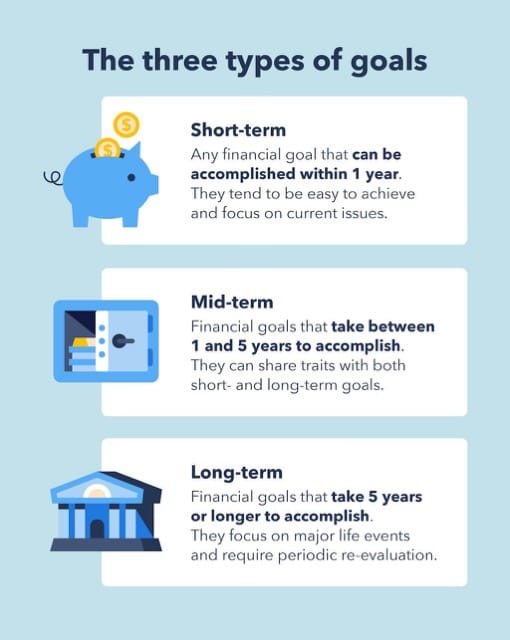
Start by defining your key financial objectives:
- Long-term lifestyle goals, such as retiring in Singapore or another preferred country.
- Major financial milestones, like funding children’s international education or building a global property fund.
- Safety-driven goals, such as maintaining a relocation buffer or healthcare contingency fund.
To do this effectively, outline your key objectives and the timeline attached to each:
Once these goals are mapped out, conduct a quick personal financial audit to understand your current position:
- Review income, spending, and savings habits to identify overspending or gaps.
- Evaluate existing assets and liabilities to see what can be reallocated or improved.
- Confirm how much you can realistically save each month based on your lifestyle in Singapore.
This clarity becomes the blueprint for your long-term financial planning.
Step 2: Diversify Across Currencies and Asset Classes
After defining your goals, the next step in building a strong retirement portfolio for expats is diversification.
For expats in Singapore, managing risk across currencies, geographies, and asset types is critical, especially when preparing for market shifts, inflation, or unexpected relocations.
A diversified expat retirement strategy reduces concentration risk and ensures your portfolio stays resilient over time, no matter where you eventually choose to retire.
When diversifying your investments, start by spreading them across multiple asset classes, each behaves differently under changing market conditions:
- Equities: Offer long-term capital growth but come with higher volatility.
- Bonds: More stable and income-generating, useful for risk balancing.
- Cash & equivalents: T-bills, fixed deposits, or money market funds provide liquidity and capital preservation.
- Alternatives: REITs, commodities like gold, or even a small crypto allocation can hedge against inflation and diversify beyond traditional markets.
Within each asset class, consider diversifying further to avoid overexposure to one region or sector:
- Equities: Diversify by geography (e.g., US, Asia, emerging markets), sector (tech, healthcare, consumer), and company size.
- Bonds: Mix government and corporate bonds with different durations and global exposure.
When diversifying your portfolio, here are some strategic approaches to consider that go beyond simply holding different assets:
- Core portfolio: Start with broad-based ETFs or unit trusts for global stability.
- Factor investing: Add exposure to undervalued, quality, or momentum-driven assets.
- Thematic investing: Allocate a smaller portion (5–15%) to growth themes like AI or ESG.
- Diversify over time: Use dollar-cost averaging to reduce the impact of market timing.
Lastly, review and rebalance your portfolio every 6–12 months. Rebalancing keeps your asset mix aligned with your goals and risk profile. Avoid over-diversifying or chasing short-term performance, and always account for hidden costs or fees that can erode long-term returns.
Step 3: Integrate Pension and Investment Strategies
A complete retirement portfolio for expats is about how you structure everything together. In Singapore, expats don’t automatically receive CPF contributions, so building a multi-layered financial plan becomes essential.
That means combining liquid emergency reserves, tax-efficient pension schemes like the Supplementary Retirement Scheme (SRS), private investments, and healthcare coverage into one cohesive expat retirement strategy.
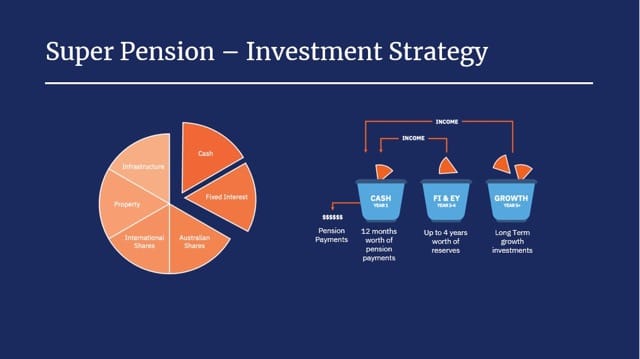
Start by building a layered structure that separates short-term liquidity from long-term growth:
- Set aside 6–12 months of essential living expenses in a liquid, low-risk account, such as a cash management platform or Singapore T-bills, to handle job transitions, relocation, or emergencies.
- Contribute to SRS annually to reduce your taxable income, and invest those funds into ETFs, REITs, or government bonds to maximise long-term returns.
- Create a core portfolio that balances growth assets like global equities with stable, income-generating instruments such as dividend stocks and Singapore Savings Bonds.
Next, address healthcare, one of the most underestimated but crucial aspects of expat life in Singapore. Medical care in Singapore is world-class, but costly without subsidies.
- Secure comprehensive private health insurance that covers outpatient, specialist, and hospitalisation costs.
- Set up a dedicated medical savings buffer to avoid dipping into long-term investments when healthcare expenses arise.
As your life changes, your plan should evolve too. Review your financial structure regularly to stay aligned with your goals:
- Reassess your retirement needs and budget at least once a year, especially after major life events like moving countries, getting married, or purchasing property.
- Use the Rule of 72 to estimate how quickly inflation could double your living expenses, crucial in a high-cost city like Singapore.
- Avoid complex or unregulated financial products, and ensure you only invest through MAS-regulated institutions and platforms.
Step 4: Optimise for Tax Efficiency and Withdrawals
Tax planning is a critical yet often overlooked part of building a smart retirement portfolio for expats.
In Singapore, where there’s no capital gains tax and retirement income can be partially or fully exempt, expats have a unique opportunity to minimise their tax liability while maximising long-term returns.
A well-structured expat retirement strategy ensures you keep more of it when it’s time to draw it down. This is especially important for those planning how to retire in Singapore as a foreigner, where cross-border income streams and tax residency rules may apply.
The Supplementary Retirement Scheme (SRS) is a primary tax-advantaged vehicle available to expats:
- Tax relief on contributions: Each dollar you contribute (up to S$35,700/year for foreigners) reduces your taxable income.
- Tax-deferred growth: Investment gains within the SRS are not taxed until withdrawal, making it essential to invest the funds, not let them sit idle.
- Partial taxation on withdrawals: After the statutory retirement age (currently 63), only 50% of each withdrawal is taxable.
Singapore’s CPF scheme also plays a role, especially if you later obtain PR status:
- CPF contributions are tax-exempt, and CPF LIFE payouts are generally not taxed.
- Cash top-ups to your CPF Special or Retirement Account can provide tax relief of up to S$8,000 for yourself and an additional S$8,000 for family members annually.
To optimise withdrawals in retirement, plan to keep taxable income within the lowest tax brackets:
- Spread your SRS withdrawals over a 10-year period to minimise tax liability. For example, withdrawing S$40,000/year means only S$20,000 is taxable—often below the tax threshold.
- Coordinate withdrawals with other income streams, such as CPF LIFE payouts, rental income, or part-time work.
- Consider purchasing an annuity with part of your SRS, which creates a long-term income stream with continued 50% tax relief on payouts.
- Avoid early withdrawals, which are 100% taxable and incur a 5% penalty unless made under approved exemptions (e.g. medical emergencies).
Step 5: Review and Rebalance Regularly
A successful expat retirement strategy isn’t set-it-and-forget-it. Economic conditions shift, personal goals evolve, and asset performance drifts, making regular review and rebalancing a critical step in maintaining a healthy, goal-aligned retirement portfolio for expats.
Start by rebalancing your investment portfolio to maintain your target asset allocation:
- In your 20s–30s, prioritise growth by allocating more to equities to outpace inflation.
- In your 40s–50s, shift gradually toward a mix of equities and bonds to protect gains.
- In your 60s and beyond, emphasise capital preservation and reliable income, such as Singapore Savings Bonds, annuities, or dividend stocks.
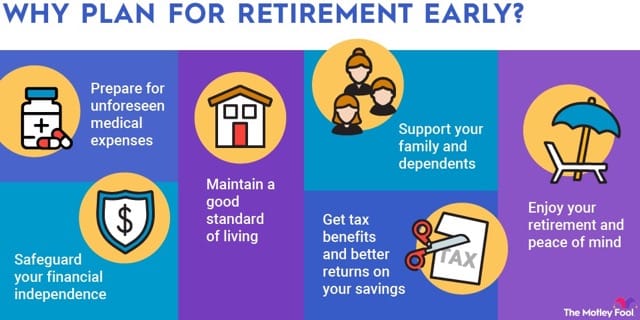
Start planning your retirement as an early age. Source: The Motley Fool
Use tools like SRS and CPFIS to rebalance efficiently while enjoying tax benefits.
Next, review your CPF strategy, especially as you approach age 55:
- Choose the right CPF LIFE plan (Basic, Standard, or Escalating) to match your desired payout structure.
- Consider topping up your Retirement Account to the Enhanced Retirement Sum (ERS) for higher lifetime payouts.
- Plan for the CPF Special Account closure at age 55, and reallocate funds wisely to maintain stable returns.
Insurance coverage also needs periodic evaluation. As you age, your protection needs shift from income replacement to healthcare support:
- Ensure adequate health insurance coverage, especially after retirement when employer-provided plans end.
- Assess the need for disability or long-term care insurance, especially if you plan to age in Singapore.
- Adjust life insurance levels, you may need less as assets grow and dependents become financially independent.
Finally, reassess your retirement goals annually:
- Use tools like the CPF Retirement Payout Planner to project monthly income based on your current savings.
- Adjust savings, investment, or work plans if you identify gaps between your projected and required retirement income.
- Explore monetisation options like the HDB Lease Buyback Scheme or rental income if you’re planning to retire locally.
BlueAlpha Capital – Your Trusted Singapore Expat Pension Advisor
Blue Alpha Capital offers comprehensive retirement planning tailored to expats in Singapore, providing structured, globally portable pension strategies.
With CPF unavailable to foreigners, expats must build retirement portfolios using tax-efficient, compliant, and diversified instruments—this is where Blue Alpha delivers complete solutions:
- SRS + Global Investments: Blue Alpha integrates the Supplementary Retirement Scheme (SRS) with global investment options tailored to your residency and mobility profile, giving you both tax relief and long-term growth.
- Offshore Pension Structuring: Dedicated offshore pension vehicles are structured through regulated trust entities to ensure asset protection, multi-currency flexibility, and international portability.
- Custom Contribution & Withdrawal Plans: Flexible contribution limits, multi-jurisdictional withdrawal strategies, and estate integration ensure your plan adapts as your career and location evolve.
- Wealth and Tax Alignment: Investment management is directly coordinated with tax and legacy planning, so you stay fully compliant while preserving generational wealth.
Book a one-on-one consultation with Blue Alpha Capital today to get a retirement and pension strategy built for your expat journey