How US Expats Can Manage Their 401(k) and IRA While in Singapore
Post date:


Key Takeaways
- Direct 401(k) transfers to Singapore are not allowed, and a US expat 401k Singapore rollover must stay within the U.S. system, typically into an IRA, to avoid taxes and penalties.
- Your 401(k) remains active when you move abroad, but expats often face restricted access, limited investment choices, and cross-border tax considerations when managing the account overseas.
- U.S. expats in Singapore must plan around taxable withdrawals, early-withdrawal penalties, and the lack of special treatment under the US–Singapore tax treaty retirement accounts, making an IRA the most flexible long-term option.
- Expats have several IRS-compliant alternatives, including IRAs, expat-friendly brokerage accounts, SGS/SSB/T-Bills, and selective use of SRS, allowing them to build tax-efficient retirement savings even when 401(k) contributions cease.
Transfer US Expat 401k Singapore: What You Need To Know
A 401(k) plan is a tax-advantaged retirement account sponsored by a U.S. employer, allowing employees to contribute pre-tax income and grow their investments over time.
However, once an American moves overseas, especially to Singapore, managing or transferring a 401(k) plan can become complicated. The IRS, U.S. tax rules, and strict distribution regulations still apply no matter where you live.
Additionally, most foreign financial institutions are unable to receive direct 401(k) transfers, and cross-border pension movements may result in unexpected tax liabilities or penalties.
This is why US expats in Singapore need to understand the rules clearly before deciding whether to leave the 401(k) in the U.S., roll it into an IRA, or explore other long-term planning options.
Can You Transfer a US 401k to an International Retirement Plan?
No, you cannot transfer a U.S. 401(k) directly into an international retirement plan. U.S. law only allows tax-free rollovers into other U.S.-qualified accounts, and most foreign plans do not meet IRS requirements. This includes Singapore, which means a US expat 401k Singapore transfer is not permitted.
If you want to move your 401(k) after leaving the U.S., the only compliant option is to roll it into a U.S.-based IRA. An IRA for US expats abroad keeps the funds in the U.S. tax system and avoids creating immediate taxable income.
However, if you withdraw money from that IRA and deposit it into a foreign retirement plan, the IRS treats it as a taxable distribution, and if you’re under 59½ years old, it can also trigger the 10% early-withdrawal penalty.
Additionally, the US–Singapore tax treaty retirement accounts do not provide any special rollover treatment or recognition of Singapore pension schemes. Even with treaty benefits, a direct 401(k) transfer to a Singapore plan is not permitted.
What Happens to Your 401k When You Move Abroad?
When you relocate overseas, including Singapore, your 401(k) does not close. U.S. regulations allow non-residents to maintain retirement accounts like a 401(k), so you can keep your plan even after moving abroad.
For many individuals managing a US expat 401k Singapore, the account continues operating under full U.S. tax rules.
However, some providers restrict online access, investment changes, or customer support based on your country of residence. So, confirm your provider’s overseas servicing policies before or shortly after your move.
Once your U.S. employment ends, you have three main ways to manage the account while living abroad. Each option has tax implications, access considerations, and long-term planning impact for expats.
- Take a full distribution
A distribution is treated as taxable income because 401(k) funds are tax-deferred. You will face an immediate 20% federal withholding, plus a 10% early-withdrawal penalty if you are under 59½.
Depending on your last state of residence, approximately 10% state tax may also apply. This option significantly reduces the value of your retirement savings and is rarely recommended for expats unless there is a specific financial need.
- Roll the 401(k) into an IRA
This option preserves the tax-qualified status of your retirement funds and avoids immediate U.S. taxation.
An IRA for US expats abroad typically offers broader investment choices, simpler long-term management from Singapore, and greater flexibility when planning retirement withdrawals. This is one of the most common strategies for expats seeking to maintain control over their assets without triggering tax penalties.
- Leave the 401(k) with your plan provider
You may choose to leave the account exactly as it is. This is fully compliant for non-residents, and you can withdraw funds later when needed.
The trade-off is that investment options remain limited, and some administrators reduce platform access or customer support for clients living overseas.
Even so, it remains a valid option for expats who prefer minimal changes.
What To Do With Your 401k When Moving Abroad
When you move overseas, the first question is whether you can continue contributing to your 401(k). If you remain employed by a U.S.-based employer, contributions can continue because the plan is tied to your employer, not your location.
But if you begin working for a foreign employer, you can no longer contribute to your old 401(k) and your new employer will not offer one. In that case, most expats shift their long-term savings strategy to an IRA or other retirement vehicles that remain compliant with U.S. tax rules.

When deciding what to do with your 401(k) as an expat, here are the options available to you:
- Leave your 401(k) where it is
You can keep your 401(k) in the U.S., even if you permanently relocate. This is the simplest option, especially if you’re satisfied with the investment lineup and fees.
However, many expats face servicing limitations because investment disclosures sent by providers apply only to U.S. residents.
As a result, your provider may restrict certain features, including fund transfers, adding new investments, or initiating new transactions. You can still withdraw money when needed, but managing your finances becomes more challenging once you live abroad.
- Roll the 401(k) into an IRA
Rolling your 401(k) into an IRA offers more flexibility, lower average fees, and better long-term control. An IRA remains within the U.S. retirement system, so it avoids the limitations many expats experience with 401(k) providers.
For US expats living in Singapore or other global hubs, this is often the most practical pathway because it preserves tax-advantaged growth and simplifies management from overseas.
- Cash out the 401(k)
This option is technically available but carries significant downsides. Early withdrawals (before 59½) are subject to income tax and a 10% penalty, and the immediate federal withholding reduces the value upfront.
Cashing out also diminishes long-term retirement savings, making this strategy unsuitable for most expats unless required by a specific financial situation.
- Transfer to an international retirement plan
Some expats explore whether they can move their 401(k) into a plan offered in their new country. In practice, this is rarely possible. U.S. rules generally do not allow 401(k) assets to be transferred into foreign plans, and most foreign schemes are not considered “qualified” under IRS rules.
Even in countries with favorable tax treaties, direct transfers are typically not recognized.
Overall, while you can technically close your 401(k) after moving abroad, very few expats do so because of the tax penalties and loss of retirement value. Most prefer to leave the funds in the U.S. or roll them into an IRA to maintain tax efficiency and long-term growth potential while living overseas.
Common Notices When Managing a 401k Abroad
When you manage a 401(k) as a US expat living in Singapore, the core challenge isn’t whether you can keep the account.
The challenge lies in how the account behaves once you’re no longer a U.S. resident. Most issues fall under three categories: tax impact, access restrictions, and contribution rules. Understanding these notices early prevents costly mistakes and helps you maintain full control over your retirement strategy.
- Your 401(k) continues to grow tax-deferred—but withdrawals are fully taxable:
Leaving the U.S. does not change how withdrawals are treated. When you eventually draw from your 401(k), the IRS taxes the distribution as ordinary income, regardless of whether you are living in Singapore, the UAE, or anywhere else.
If you withdraw funds before age 59½, the IRS also applies a 10% early-withdrawal penalty, which expats are not exempt from.
In some countries, withdrawals may also be considered taxable local income, increasing the risk of double taxation, especially because the US–Singapore tax treaty retirement accounts provide no special carve-out for 401(k) distributions.
- Foreign-country tax rules may apply to your withdrawals
While your 401(k) remains governed by U.S. tax law, any withdrawals may be taxed again in the jurisdiction where you reside, depending on the local tax laws.
Singapore does not tax foreign-sourced income if it is not received through a Singapore business, but expats returning to other countries later could face local taxation. This means your long-term residency plans directly influence the net value of your 401(k) in retirement.
- Many 401(k) providers restrict account servicing for expats
This is one of the most practical issues expats face. Once you change your address to an international one, providers may restrict certain actions, sometimes without clear warning.
Depending on your provider, you may face limits such as:
- No ability to switch between investment funds
- No new trades or purchases allowed
- Blocked access due to foreign IP addresses or local regulations
- Required U.S. bank account for withdrawals
You will still be able to withdraw money, but active management becomes extremely limited, making it difficult to rebalance or adjust your long-term strategy while living in Singapore.

- Banking and currency complications affect how you receive funds
Some 401(k) administrators only send withdrawals to U.S. bank accounts or issue paper checks. If your retirement income will eventually be used in Singapore, exchange rate fluctuations can significantly impact your returns.
Keeping your entire retirement balance in USD may expose you to long-term currency risk, especially if you plan to retire outside the U.S.
- Contribution rules depend entirely on your employer
- If you work for a U.S.-based employer abroad, you can continue contributing normally.
- If you work for a foreign employer, contributions stop immediately because foreign companies cannot sponsor a 401(k).
In this situation, many expats open an IRA or adjust their long-term savings plan, especially those managing a US expat 401k Singapore setup.
- Foreign reporting and compliance may apply depending on where you live
While Singapore does not require 401(k) reporting, other countries may classify your 401(k) as a foreign asset.
On the U.S. side, while your 401(k) itself is not generally reported on FBAR or FATCA, expats often open foreign accounts to receive withdrawals or manage investments, and those do become part of your reporting obligations.
Failure to meet reporting rules can lead to severe penalties, which is why cross-border compliance is a core part of managing a retirement account abroad.
Best 401k Alternatives for US Expats in Singapore
- Individual Retirement Accounts (IRAs)
For many Americans living in Singapore, the Individual Retirement Account (IRA) is the most practical continuation of retirement saving once 401(k) contributions stop.
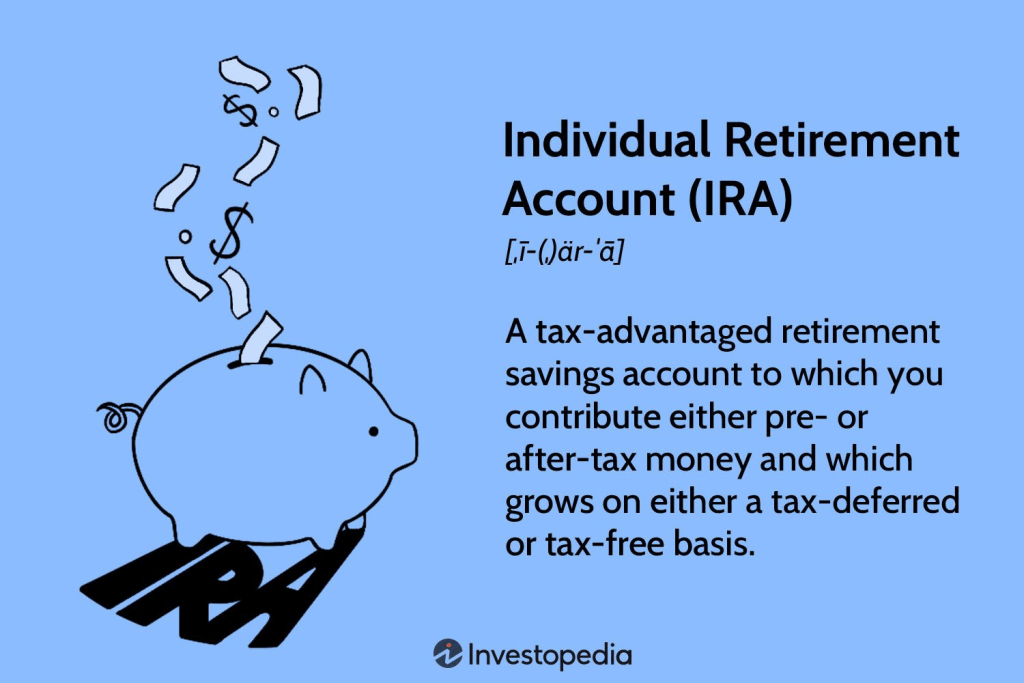
An IRA keeps your investments inside the US financial system, helping you avoid foreign reporting issues and PFIC exposure. This makes it one of the most reliable solutions for a US expat 401k Singapore transition.
You can contribute if your income exceeds the Foreign Earned Income Exclusion (FEIE), and you also have the option to roll over an old 401(k) into an IRA for greater investment flexibility.
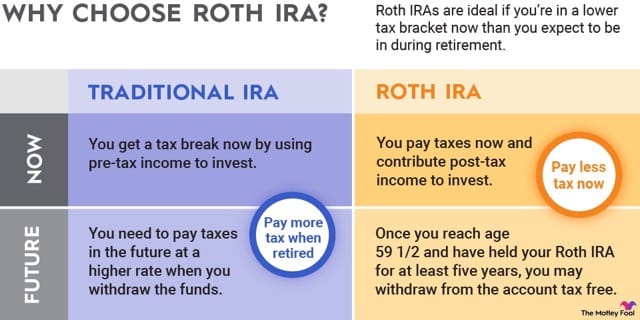
IRAs come in two forms, each offering distinct tax advantages depending on your income and long-term plans.
Traditional IRA advantages include:
- Potential US tax deduction for eligible contributions
- Tax-deferred investment growth
- Suitable if you expect a lower tax bracket in retirement
Roth IRA advantages include:
- Tax-free growth and tax-free withdrawals
- Beneficial if you expect higher future income
- No required minimum distributions during your lifetime
Expats appreciate IRAs because they remain simple to manage from abroad, especially compared to foreign retirement accounts, which often require complex IRS reporting. For many US expats abroad, choosing an IRA offers continuity, stability, and long-term tax efficiency after relocating to Singapore.
- US-Domiciled Taxable Brokerage Accounts
A US-domiciled taxable brokerage account is one of the most flexible investment tools for Americans in Singapore.
Unlike IRAs, it has no limits on contributions, no income restrictions, and no residency complications. This makes it especially valuable for expats who want to keep building long-term investments even after losing access to employer-sponsored retirement accounts.
Because these accounts stay entirely within US jurisdiction, they avoid the IRS reporting challenges and PFIC rules associated with many non-US investment products.
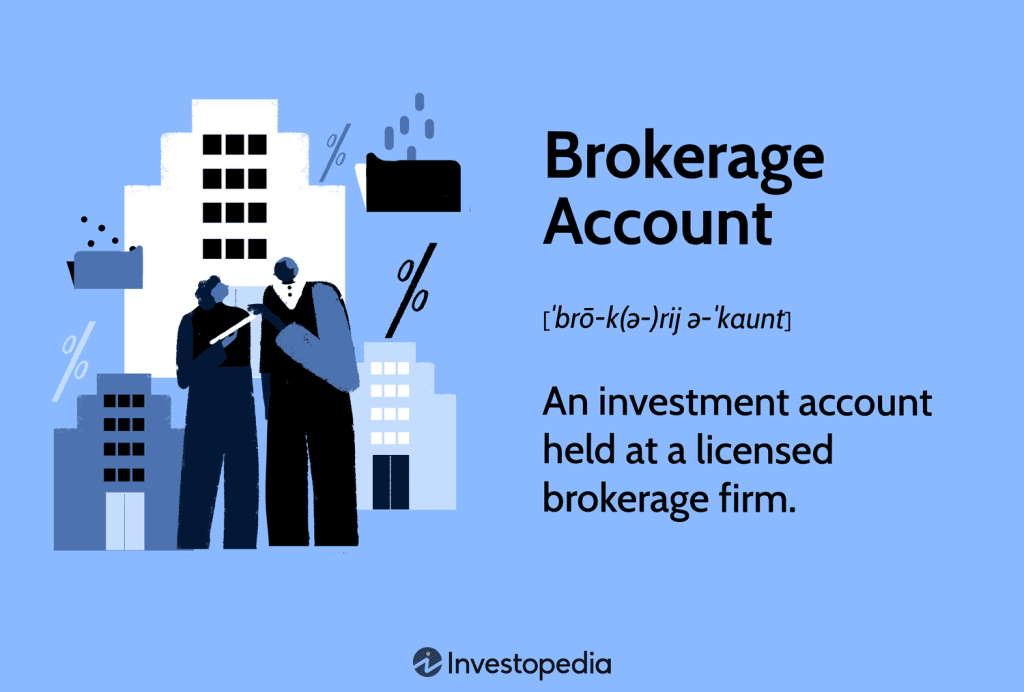
Taxable brokerage accounts also work well for expats because Singapore does not impose capital gains tax. This allows you to invest, rebalance, and sell assets without creating additional tax obligations in Singapore, even though gains remain taxable in the US.
With no US Singapore tax treaty, using a US-based platform reduces uncertainty and simplifies compliance.
Key benefits for US expats include:
- No contribution limits or penalties
- Access to US-listed ETFs, stocks, and bonds
- No PFIC exposure when using US-domiciled funds
- Compatible with expat-friendly brokers such as Schwab International or Interactive Brokers
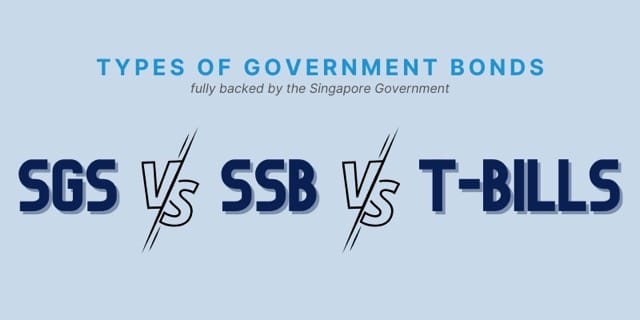
- Singapore Government Securities (SGS), SSBs & T-Bills
Singapore Government Securities offer expats low-risk, transparent investment options backed by one of the world’s strongest fiscal systems.
Although these products do not function as retirement accounts, they are useful for expats who want stability alongside their US-based retirement planning. The simplicity of these instruments makes them easy to integrate, even when managing cross-border tax obligations.
SGS, SSBs, and T-Bills share the benefit of being backed by the Singapore government, offering predictable returns without complex structures.
They are also not considered PFICs, which makes them safe for US tax compliance. Interest earned is not taxed in Singapore, although it must still be reported on your US tax return.
How each product benefits US expats:
- SGS Bonds: Long-term fixed-income options with stable returns
- SSBs: Flexible redemption, step-up interest, and no penalties for early withdrawal
- T-Bills: Short-term, safe holding vehicle for parked cash
Additional advantages include:
- No capital gains tax in Singapore
- No estate duty concerns
- Straightforward integration with your broader retirement strategy
These securities are not retirement accounts, but they complement a US expat 401k Singapore plan by providing low-risk options for diversification and cash management.
- Supplementary Retirement Scheme (SRS)
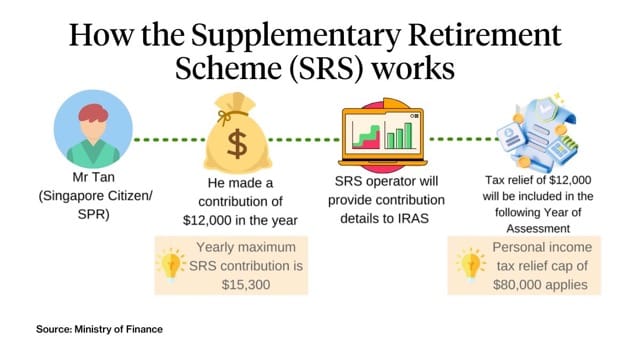
The Supplementary Retirement Scheme (SRS) is Singapore’s voluntary retirement savings program, offering meaningful tax benefits within Singapore, especially for foreigners who can contribute up to S$35,700 per year.
SRS contributions reduce your Singapore taxable income, which is beneficial for expats earning higher salaries. However, for Americans, SRS must be approached with caution because the IRS does not recognize it as a qualified retirement plan.
This lack of recognition results in SRS contributions and investment gains being taxable in the US. Since there is no US Singapore tax treaty, withdrawals may be taxed by both countries unless carefully planned and offset using foreign tax credits.
SRS works best for expats who intend to stay in Singapore long-term, strategize their withdrawals, and invest only in US-domiciled products to avoid PFIC issues.
Key benefits for US expats include:
- High annual contribution allowance
- Significant Singapore income tax relief
- 50% tax concession for withdrawals at or after retirement age
Key drawbacks include:
- Annual US taxation on investment gains
- Potential dual taxation upon withdrawal
- Limited rollover options and no compatibility with US retirement accounts
SRS is useful in the right circumstances, but due to its cross-border tax complexity, most US expats should use it selectively and with professional guidance.
BlueAlpha Capital – Your Trusted Singapore Expat Pension Advisor
If you’re a U.S. expat in Singapore, your 401(k) alone won’t protect your retirement. You need a pension strategy built for mobility, compliant with U.S. tax rules, and flexible enough to support your life across multiple countries.
That’s where BlueAlpha Capital comes in, we design structured pension solutions for foreigners who can’t rely on CPF, and who need stronger protection than an IRA or brokerage account can provide.
Here’s what you’ll get when you work with us:
- A personalised, expat-specific pension plan that replaces the limits of your 401(k)
- Offshore pension vehicles with regulated trust protection
- Multi-currency investment strategies to reduce USD exposure
- Integrated U.S.–Singapore tax planning and retirement coordination
- Expert guidance on 401(k), IRA and global asset structuring
If you want a clear, actionable retirement plan built for expats, book your consultation with BlueAlpha Capital today!