
What Is Financial Planning? Everything An Expat In Singapore Must Know
Key Takeaways
- What is financial planning? It is the process of assessing your current finances, setting long-term goals, and creating a roadmap to achieve them. A strong financial plan covers income, savings, debts, investments, and risk management, helping you gain clarity and control over your future
- Financial planning is important because it brings structure, discipline, and flexibility to your money management. It allows you to save consistently, manage risks, plan for retirement, and be ready for emergencies. For expats in Singapore, it also helps navigate high living costs, tax rules, and global financial commitments.
- Many fail because financial planning is complex, emotional, and often clouded by conflicting advice, knowledge gaps, and lack of discipline. External forces like inflation or market volatility further disrupt plans. These challenges are greater for expats who face unique issues such as cross-border taxes, asset management, and employment stability.
- Effective planning starts with understanding Singapore’s financial environment, setting up local banking, mastering taxes, and building an emergency fund. Expats should also manage currency risks, secure insurance, plan for retirement beyond CPF, diversify investments, and stay updated on policy changes.
What Is Financial Planning?
Financial planning is the process of looking at where you stand financially today, deciding where you want to be in the future, and creating a strategy to get there. Simply put, it’s about making a roadmap for your money so you can meet your needs now while also preparing for long-term goals.
A good financial plan takes into account your income, expenses, savings, debts, and investments. It helps you set priorities, like paying off loans, building an emergency fund, saving for retirement, or buying a home. More importantly, it shows you how to use your money wisely to grow wealth and protect yourself from financial stress. With a solid financial plan, you’ll have more clarity, confidence, and control over your financial future.
Read more: Financial Planning for Expats in Singapore: A Complete Roadmap

Why Is Financial Planning Important? (As An Expat In Singapore)
Financial planning is important because it gives you structure and clarity in how you use your money.
Instead of living from paycheck to paycheck or making financial decisions on impulse, a sound financial plan provides direction. It helps you stay disciplined, save regularly, invest wisely, and prepare for both opportunities and challenges.
Some of the key benefits of having a financial plan include:
- Financial discipline – Encourages consistent saving and investing habits.
- Risk management – Ensures your investments match your goals and risk appetite.
- Flexibility – Adapts to life changes such as a new job, family needs, or health concerns.
- Emergency readiness – Helps you set aside funds for unexpected events.
- Tax efficiency – Maximises deductions and optimises your after-tax income.
- Goal tracking – Lets you measure progress and adjust along the way.
- Retirement planning – Builds a secure income stream for life after work.
For expats living in Singapore, financial planning takes on added significance. The high cost of living, unique tax system, and mandatory savings schemes all shape your financial journey.
You may also have to balance global responsibilities, supporting family abroad, investing across different markets, or preparing for retirement in another country.
By creating a clear plan, expats can navigate these complexities, avoid costly mistakes, and make the most of opportunities in Singapore’s financial environment.
How Come You Fail In Financial Planning
Financial planning sounds straightforward, set goals, save, invest, and protect your wealth. But in reality, many people struggle to stick to a plan, and there are several reasons why.
- It’s complex
Even small changes, like retiring a year early or adjusting your savings rate, can ripple across decades, affecting taxes, investments, and retirement outcomes. Financial planning resembles multi-dimensional chess, where each move creates cascading effects.
- Money is emotional
Fear, stress, or overconfidence can push us into overspending, ignoring risks, or chasing quick gains.
During market downturns, fear drives people to sell investments at a loss, while market euphoria leads to risky speculation. Stress from job uncertainty might cause over-saving in low-yield accounts, missing investment opportunities.
Pride can prevent seeking help when struggling, while shame about past financial mistakes leads to avoidance behaviours. These emotions override logical analysis, causing decisions that sabotage long-term economic health.
- Conflicting advice
For every strategy you hear, there’s often a contradictory one, leaving you unsure who to trust. Classic “buy low, sell high” advice sounds logical, but requires market timing skills most lack.
Meanwhile, dollar-cost averaging advocates suggest regular investing regardless of market conditions. Some experts promote aggressive equity portfolios for young investors, while others emphasize diversification and risk management.
Financial media amplifies this confusion, with daily contradictory headlines about market predictions and investment strategies.
- Discipline is hard
Staying consistent with savings and resisting lifestyle creep requires long-term commitment without immediate rewards. Our brains are wired for instant gratification, making it difficult to sacrifice present enjoyment for future benefits.
Lifestyle creep, gradually increasing spending as income rises, quietly erodes savings capacity. Maintaining consistent investment contributions during market volatility, avoiding impulse purchases, or sticking to budgets requires sustained willpower that’s mentally exhausting to maintain.
- External forces.
Inflation, interest rates, and market swings can quickly disrupt even the best-laid plans. Singapore’s inflation, reaching multi-year highs, affects purchasing power calculations.
Interest rate changes impact mortgage costs and investment returns. Global market volatility can slash portfolio values overnight, derailing retirement timelines.
Economic policies, tax law changes, or regulatory shifts can make previously sound strategies obsolete, requiring constant plan adjustments.
For expats, these difficulties are amplified by expat financial challenges Singapore. Higher living costs, complex tax rules, and managing assets across multiple countries can make it harder to stay on track.
For example, prioritizing offshore investments adds an extra layer of decision-making. Job security and income stability, especially in times of economic slowdown, also weigh heavily on expat households.
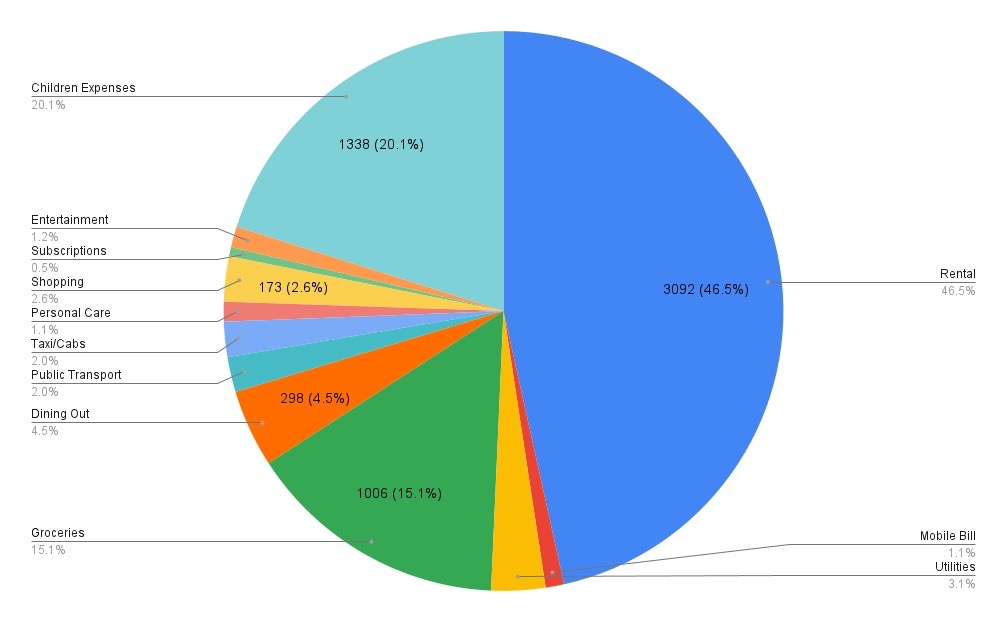
Singapore’s cost of living is high, with rental being the highest expense. Source: Husny Jeffrey
Recent AIA Singapore data shows 83% of residents prioritize financial management amid economic uncertainty, with 40-49 year-olds feeling less equipped (34% confidence) than younger residents (54% confidence). Challenges are amplified for expats lacking local financial networks, cultural context, and a comprehensive understanding of Singapore’s unique financial landscape.
A Financial Advisor Guide To An Effective Financial Planning (For Expat in Singapore)
Creating an effective financial plan as an expat in Singapore requires balancing everyday expenses with long-term goals, while also adapting to the unique financial environment of the country. Below are practical steps that can help expats manage their money more effectively and avoid common pitfalls.
- Start with Singapore’s Financial Landscape
Before diving into complex investment strategies, understand Singapore’s unique financial environment.
With upcoming policy changes, including the Annual Value threshold increase from $25,000 to $31,000 affecting over 1 million properties and Budget 2025’s focus on enhanced social safety nets, expats need to stay informed about evolving regulations that could impact their financial planning.
- Establish Your Foundation First
Open the right accounts immediately. Set up a multi-currency account with DBS, UOB, or OCBC to minimize exchange fees and simplify international transactions.
This becomes crucial as wage adjustments based on National Wages Council guidelines may affect your income trajectory.
- Master Your Tax Obligations Early
Singapore’s 0-22% tax rates are attractive, but complexity arises from dual obligations.
Understand your tax residency status (183+ days makes you a resident) and leverage Double Taxation Agreements to avoid paying twice. With Budget 2025 emphasizing skills upgrading support, factor potential tax implications of professional development investments.
- Build Your Emergency Fund Strategically
Aim for 6-12 months of expenses, higher than the typical 3-6 months due to Employment Pass dependency. Keep funds in Singapore dollars to cover immediate local expenses, but maintain some home currency reserves for potential repatriation costs.
- Navigate Healthcare and Insurance Wisely
Since you’re excluded from MediShield Life subsidies, comprehensive private health insurance is essential. Factor rising healthcare costs mentioned in recent policy discussions into your budget planning.
- Plan Beyond Singapore’s Borders Currency
Use forward contracts for major transactions and monitor exchange rates for optimal timing. With Singapore’s strong financial sector, consider Singapore-focused investments alongside home country assets for diversification.
- Leverage Singapore’s Investment Opportunities
Explore REITs, Singapore Exchange listings, and government bonds. However, balance local investments with global diversification, your investment horizon shouldn’t be limited by your visa duration.

The 10 most important REITs to invest in. Source: The Smart Investor
- Stay Adaptable and Informed
Singapore’s policies evolve rapidly. The upcoming Budget 2025’s focus on cost-of-living support and skills development may create new opportunities or requirements. Set quarterly reviews to adjust your plan based on policy changes, career developments, and personal circumstances.
- Think Long-term Despite Temporary Status
Even with Employment Pass uncertainty, maintain long-term thinking. Build retirement savings through private schemes since CPF access is limited. Consider where you’ll eventually retire, this fundamentally shapes your investment and savings strategy.
- Seek Professional Guidance
Engage licensed financial advisers familiar with expat complexities. The intersection of multiple tax jurisdictions, currency risks, and Singapore-specific regulations requires expertise beyond general financial planning knowledge.
Stop struggling with Singapore’s complex financial landscape alone.
At BlueAlpha Capital, we specialize exclusively in expat financial planning with over 40 years of experience helping professionals like you navigate multi-jurisdictional taxes, currency risks, and Employment Pass uncertainties.
We create your personalized digital financial blueprint through our secure platform, showing exactly where you stand today and where you’ll be tomorrow. Our fiduciary approach means we work solely in your best interests, no commission conflicts, just clear guidance on minimizing taxes, managing currency exposure, and building wealth despite visa limitations.
Book your consultation today and get the Singapore expat expertise you need to succeed financially.