Financial Planning for Expats in Singapore: A Complete Roadmap
Key Takeaways
- Financial planning gives expats in Singapore a clear picture of their finances, helping them prioritise goals, uncover risks, and make informed decisions about savings, investments, insurance, and retirement. It reduces uncertainty and builds confidence to achieve both short-term needs and long-term ambitions.
- Effective financial planning Singapore involves assessing your current situation, setting goals, building an emergency fund, managing debt, exploring investments like SGX stocks, ETFs, REITs, and unit trusts, making use of tax reliefs, and reviewing your plan annually.
Why Do We Need Financial Planning?
Financial planning is the process of reviewing your current financial situation, setting clear goals, and creating a strategy to achieve them. It gives you a complete picture of where you stand financially and helps you identify the adjustments you need to make, such as building savings, investing wisely, or protecting yourself with insurance.
The purpose is simple: to give you greater control over your money so you can meet both short-term needs and long-term ambitions with confidence.
A well-structured financial plan can:
- Prioritise goals: For example, an expat couple in their 30s may decide to focus on saving for their child’s education in Singapore while also contributing to a retirement fund back home.
- Maximise opportunities: By choosing the right account types or financial products, like investment portfolios with compounding returns, you can make your money work harder over time.
- Uncover vulnerabilities: A professional expat in Singapore once realised during planning that he had no emergency fund. When he was retrenched, having later built a six-month cash reserve, saved him from dipping into retirement investments at a bad time.
- Adapt to life changes: A single expat might focus on building a diversified investment portfolio, but once married with children, priorities may shift towards buying a family home or securing health and life insurance.
Importantly, financial planning isn’t a “set-and-forget” task. It’s an ongoing process that evolves as your circumstances and goals change.

For example, an expat arriving in Singapore might first focus on settling in, budgeting, and understanding local tax obligations. But 5 years later, their plan may need to account for upgrading to a larger home, planning for children’s schooling, or even considering permanent residency.
Ultimately, financial planning helps reduce stress and gives you peace of mind. When you know you have a roadmap, whether it’s retiring with an S$2,500 monthly income in 2047, buying property in Singapore, or building a safety net for your family, you’re in control.
That confidence allows you to focus on what matters most: building a fulfilling life in Singapore.
Read more: What Is Financial Planning? Everything An Expat In Singapore Must Know
How To Start Financial Planning In Singapore
1. Assess the current financial situation
The foundation of any successful financial plan is knowing exactly where you stand today. Before you can set goals or choose investment products, you need to take an honest look at your income, expenses, assets, and liabilities.
A practical way to begin is by creating a simple budget. Start by listing all your monthly expenses, which typically include:
- Home mortgage or rent payments
- Utilities, mobile, and broadband bills
- Transport costs (MRT, buses, car loans, petrol, parking)
- Food and groceries
- Insurance premiums (health, life, home, or international coverage)
- Education costs (international school fees or tuition)
- Allowances for children, parents, or family back home
- Taxes (income tax in Singapore or in your home country)
- Entertainment and lifestyle spending
Once you have a complete picture of your spending, deduct these expenses from your monthly income. The remainder represents your potential savings and investment capacity.
Many expats in Singapore are surprised to see how much goes to hidden costs, like regular Grab rides, overseas remittances, or frequent dining out, leaving less room for long-term savings than expected.
2. Set financial goals
Once you’ve assessed your finances, the next step with financial planning in Singapore is to set clear and realistic goals. These goals give direction to your money and help you prioritise what truly matters. Instead of aiming for overly ambitious targets like saving half your salary, start with a practical approach, such as committing 10%–20% of your income to savings and investments.
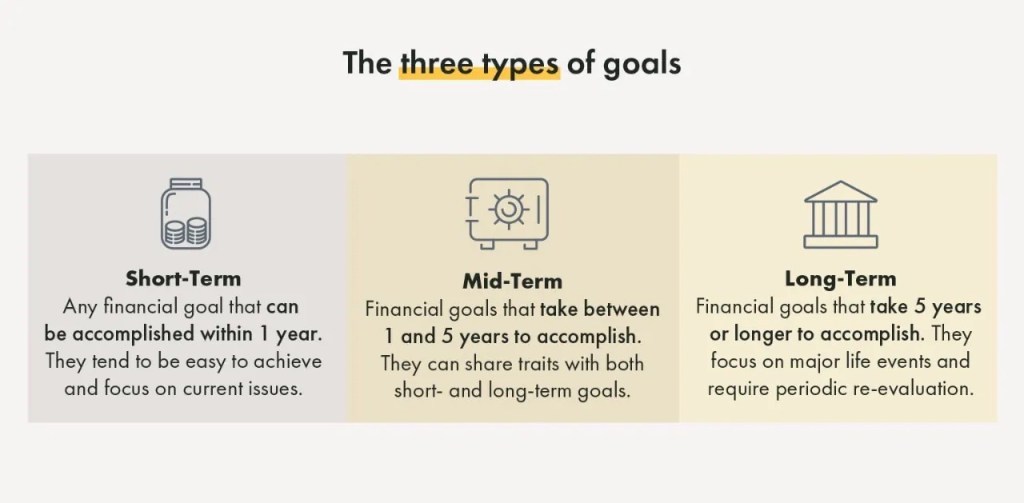
Break your goals into short-term, medium-term, and long-term categories. For example:
- Short-term: Build an emergency fund of 3–6 months’ living expenses.
- Medium-term: Save S$50,000 for a property down payment by age 32.
- Long-term: Grow a stock portfolio to generate S$1,000 in monthly dividends within 25 years.
Source: First Financial Bank
Quantifiable targets make it easier to track progress and adjust your budget. Regular reviews with financial advisory services Singapore can further refine your plan and keep you on course.
3. Calculate emergency fund needs
An essential part of personal financial planning is building an emergency fund, a financial cushion that protects you against unexpected events like sudden job loss, medical bills, or urgent home repairs.
For anyone considering financial planning in Singapore, this step is particularly important given the city’s high cost of living and competitive job market.
A good rule of thumb is to set aside three to six months’ worth of essential expenses. To calculate your target:
- Identify your essential monthly expenses: include rent or mortgage, utilities, groceries, transportation, insurance premiums, loan repayments, and allowances for dependents.
- Choose your target duration:
- 3 months: Suitable for stable jobs with no dependents.
- 6 months: A safer target for most families or those with moderate job risks.
- 12 months: Recommended for self-employed expats or anyone with irregular income.
- Multiply expenses by your target months. For example, if your essential costs are S$3,000 monthly, a 6-month fund would mean saving S$18,000.
Unlike CPF savings which are locked up for retirement, an emergency fund must remain liquid and accessible. By prioritising this step, expats can strengthen their financial planning journey in Singapore and avoid unnecessary debt during crises.
4. Get adequate insurance coverage (health, life, critical illness)
A solid financial planning Singapore strategy isn’t complete without insurance. While saving and investing grow your wealth, insurance protects it.
Life is unpredictable, medical emergencies, accidents, or the loss of a breadwinner can have devastating financial consequences. Insurance ensures that you and your family are shielded from such shocks.
At a minimum, expats and locals should consider three types of coverage:
- Health Insurance – Singapore’s healthcare is world-class but expensive. Having sufficient medical coverage ensures hospitalisation and outpatient costs don’t erode your savings.
- Life Insurance – Provides financial protection for your dependents if you pass away unexpectedly. This helps cover mortgages, children’s education, or daily household expenses.
- Critical Illness Insurance – Covers life-threatening conditions such as cancer, stroke, or heart disease. The Life Insurance Association of Singapore recommends coverage of about 4 times your annual income. Critical illness plans provide lump-sum payouts to replace lost income during recovery and to handle ongoing commitments like bills, loan repayments, or caregiving costs.
With rising healthcare costs, getting insured early is key. Modern plans, such as Complete Critical Protect, offer extensive protection from early to advanced stages of severe illnesses, giving you financial confidence to focus on recovery.
5. Manage debt and liabilities
Debt, when managed wisely, can be a useful financial too, but uncontrolled liabilities can derail even the best financial plans. Effective financial planning in Singapore involves understanding what debts you carry, how they affect your cash flow, and creating a clear repayment strategy.
There are two main types of debt to consider:
- Unsecured debt – such as credit cards or personal loans. These often come with higher interest rates, and missed payments can quickly snowball into fees, poor credit scores, or collections.
- Secured debt – such as mortgages or car loans. These are backed by assets, meaning lenders can repossess your property if you default.
A general rule of thumb is that your total monthly debt repayments should not exceed 36% of your gross income, while consumer debt (credit cards, car loans, lifestyle spending) should ideally remain under 10%. For housing, keep your mortgage or rent at around 30% of monthly income to stay financially stable.
If debt becomes overwhelming, repayment strategies like the snowball method (clearing the smallest debts first) or the avalanche method (tackling the highest interest rates first) can help. Some expats may also engage professional financial advisory services Singapore to negotiate with lenders or restructure repayments into manageable plans.
6. Explore savings and investment products (SGX, ETFs, REITs, unit trusts)
Investing is a key pillar of financial planning Singapore, as it allows your money to grow and work for you over time. Unlike savings accounts, which mainly preserve your capital, investments generate returns through capital appreciation, dividends, or interest income. By putting your money into different financial instruments, you build additional income streams and protect your wealth from being eroded by inflation.
The right investment mix depends on your goals, risk appetite, and time horizon. Here are common methods:
- Singapore Exchange (SGX) Stocks
Investing in individual companies listed on the SGX allows you to participate in Singapore’s economy directly. Popular choices include blue-chip firms such as banks, telcos, and property developers that offer stability and dividends.
- Exchange-Traded Funds (ETFs)
ETFs are cost-effective and diversify your portfolio by tracking indexes such as the Straits Times Index (STI) or global markets. For expats new to investing in Singapore, ETFs provide a simple entry point with broad exposure.
- Real Estate Investment Trusts (REITs)
Singapore is a global hub for REITs.
These instruments let you invest in income-producing properties, like malls, offices, and logistics centres, while enjoying regular payouts from rental income. For many expats, REITs are attractive because they combine liquidity (traded like stocks) with the stability of real estate.
- Unit Trusts (Mutual Funds)
Unit trusts pool funds from multiple investors and are actively managed by professionals. They’re useful for those who prefer guided investing, though management fees are higher than ETFs.
Expats should also consider diversification between Singapore-based products and offshore holdings. Ultimately, choosing the right mix of SGX stocks, ETFs, REITs, and unit trusts helps create a well-rounded foundation for your personal financial planning journey in Singapore.
7. Review and adjust plan annually
Life circumstances change, markets fluctuate, and government policies evolve. To ensure your plan remains relevant, schedule a yearly financial review to realign your strategies with your current situation and goals.
An annual review helps you see the “big picture” rather than reacting only when markets are volatile or personal stress is high. By setting aside time for a structured check-in, you can adjust rationally instead of emotionally. Think of it as a health check-up for your finances, preventive care that ensures you stay on track.
Here are 5 key questions to guide your review:
- Is your investment strategy on track? – Check if your portfolio still reflects your risk tolerance and goals.
- Are you protecting your income? – Ensure your insurance coverage (life, health, critical illness) is adequate for current needs.
- Are you preserving your assets? – Review debt levels, estate planning documents, and asset allocation.
- How does your plan affect your family? – Consider education funds, caregiving responsibilities, or changes in dependents.
During your review, also handle practical “housekeeping” tasks like updating beneficiaries, reviewing your will, and ensuring emergency funds remain sufficient. Expats in Singapore should pay extra attention to cross-border issues, such as tax treaties, overseas property, or foreign investments, that may impact their financial future
Read more: Education Savings Plan Singapore: How Much To Fund For Future Education
BlueAlpha Capital – Your Financial Advisory Services Singapore
By now, you’ve seen how financial planning in Singapore involves many moving parts, tracking expenses, building an emergency fund, managing debt, planning for retirement, and protecting yourself with the right insurance. For expats, these steps often come with extra layers: navigating tax reliefs, handling assets in multiple countries, and preparing for long-term goals that may span more than one home.
This is where BlueAlpha Capital, the financial advisory services Singapore, have your back!
As a fiduciary expat financial advisor based in Singapore, we specialise in turning these complex pieces into a clear and actionable plan. Using our secure digital platform, we build a personalised financial blueprint that maps your current position against your future goals.
With over 40 years of global experience, BlueAlpha combines independent advice, scenario planning, and ongoing reviews to ensure your plan adapts as life changes.
For expats who want more than a checklist, BlueAlpha Capital offers the ongoing partnership needed to turn financial planning into real, lasting results.